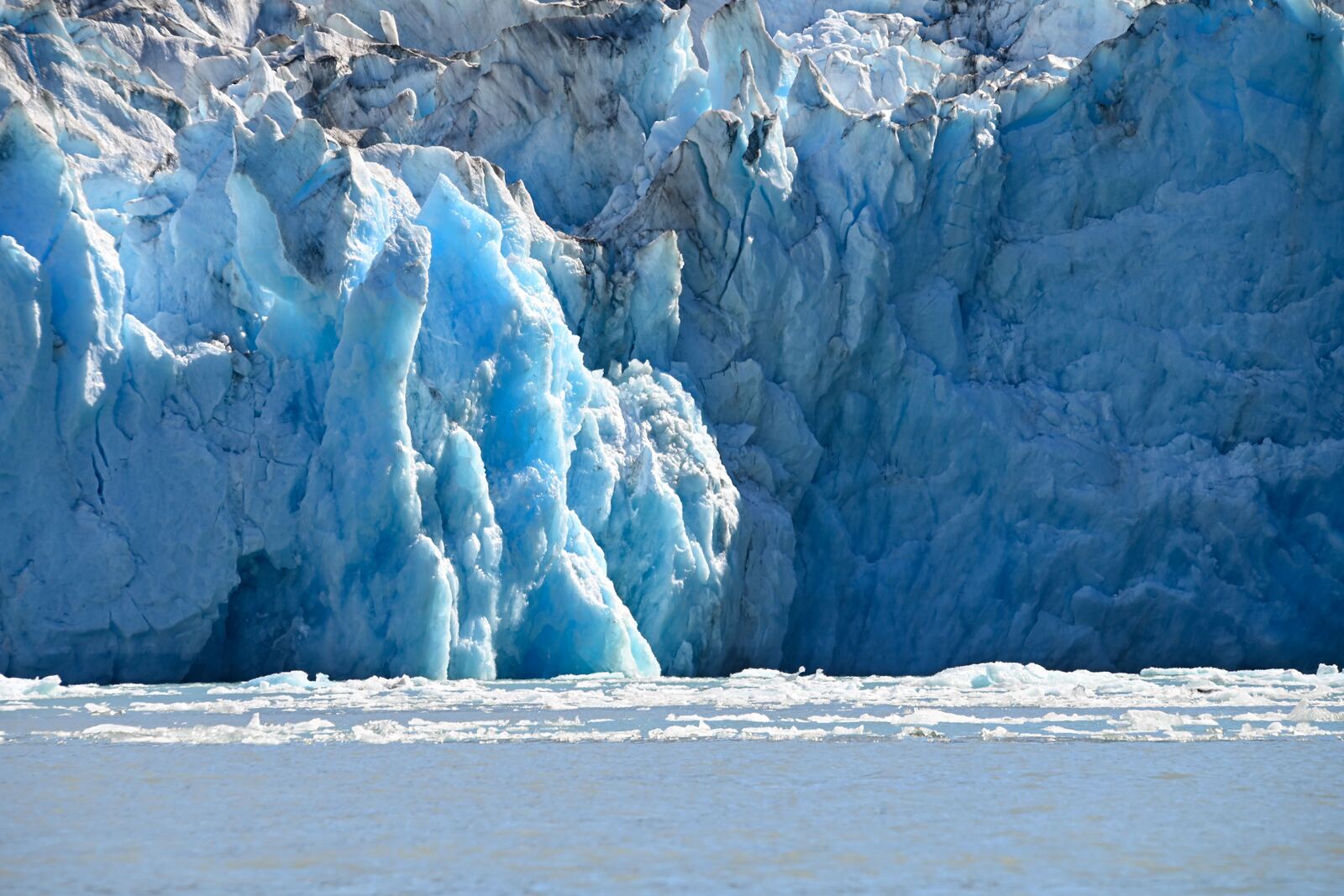
There's a moment on almost every Alaska cruise when someone on deck goes quiet mid-sentence. Maybe it's the sound first — a crack like a rifle shot rolling across the water — and then several hundred tons of blue-white ice peel off a glacier and crash into the sea. Or maybe it's a whale, rising clean out of the water forty feet from the ship, close enough that you hear it breathe.
That's what this guide is about. Not a list of towns to walk through, but a list of moments that rearrange how you think about the natural world.
Most "Alaska cruise" articles are port directories with a rating system bolted on. This one isn't. Every entry here is something you do or feel, not somewhere you merely stand. We've built it around what actually earns a place on a bucket list: things you can't replicate at home, things that require you to travel this far north, and things people are still describing, unprompted, years later.
This guide covers the real Alaska cruise bucket list — the unforgettable experiences, the best Alaska cruise ports to base them from, the hidden gems most passengers walk past, the mistakes that quietly ruin good trips, and the planning details (timing, packing, photography) that separate a good cruise from the trip of a lifetime. For a full day-by-day itinerary, see our 7-Day Alaska Cruise Itinerary.
What Makes Alaska Different From Every Other Cruise Destination
Most cruise regions sell you comfort with scenery attached. Alaska sells you scale.
You're sailing the Inside Passage, a 500-mile maze of fjords and channels sheltered from the open Pacific, so the water stays glassy even when the wind howls. Glaciers here are still actively carving the landscape in real time — not geological history, but something happening this week, possibly this afternoon. Humpback whales migrate thousands of miles specifically to feed in these nutrient-rich channels every summer. Grizzlies and black bears fish the same salmon streams tourists photograph from wooden boardwalks.
Nothing about this is staged. That's the appeal — and why doing it right matters more than in most destinations, since the best moments here are weather-dependent, season-dependent, and often first-come-first-served.
The Bucket List: 12 Experiences That Define an Alaska Cruise
These aren't ranked. They're ordered roughly as a typical Alaska cruise itinerary unfolds, and together they form a genuine Alaska cruise wildlife and adventure calendar you can build a trip around.
Watching a Glacier Calve in Glacier Bay National Park
A live geological process, not a photo-op glacier
Nothing prepares you for how loud it is. A tidewater glacier calving isn't a gentle slide — it's a detonation of sound followed by a wall of ice hitting water, then a swell that rocks even a thousand-foot ship.
Glacier Bay National Park protects more than a thousand glaciers across 3.3 million acres. Around 250 years ago, a single glacier filled the entire bay; it has since retreated more than 60 miles, which is why ships can now sail into water that was solid ice when Captain George Vancouver charted this coast in 1794. Seven of the park's glaciers are active tidewater glaciers, and Margerie Glacier, at the head of Tarr Inlet, gives you the best odds of witnessing a calving event firsthand.
- Why you shouldn't miss it: This is a live geological process, not a photo-op glacier — and the National Park Service limits access so tightly (only two cruise ships per day) that it never feels crowded.
- Best place: Margerie Glacier, Tarr Inlet. A park ranger typically narrates from the ship.
- Best season: June–August, when warmer temperatures drive more calving activity.
- Insider tip: Claim deck space at the bow at least 30 minutes before arrival — the best spots fill fast.
- Time needed: A full scenic-cruising day, with several hours near the glacier face.
- Suitable for everyone: Yes — no physical effort required.
- Common mistake: Going below for lunch right when the ship parks. Calving is unpredictable; it might happen in five minutes or two hours.
- Interesting fact: The Tlingit, who have lived here for millennia, nicknamed the sound "white thunder."
Short-form video idea: a slow, steady pan across the glacier face — when the calving happens mid-shot, it becomes an unscripted moment that performs itself on TikTok.
Watching Humpback Whales Bubble-Net Feed
A coordinated hunt found in only a few places on Earth
Most whale watching is patient waiting followed by a distant fin. Bubble-net feeding is different — a coordinated hunt where a pod dives together, blows a spiraling ring of bubbles to corral herring, then surfaces as one in an explosive lunge. Ten or twelve whales can break the surface at once, water sheeting off their jaws. It only happens in a few places on Earth, and Southeast Alaska is one of them.
- Why you shouldn't miss it: It's one of the few wild behaviors that looks more dramatic in person than on a nature documentary — you feel the boat rock from the displaced water.
- Best place: Point Adolphus in Icy Strait, plus Frederick Sound, Stephens Passage, and Juneau's Favorite and Saginaw Channels.
- Best season: Late July through August.
- Insider tip: Book a small-boat tour with local naturalists who track known feeding groups — better odds than relying on ship sightings alone.
- Time needed: Half-day (3–4 hours).
- Suitable for everyone: Yes, though open water can be choppy.
- Common mistake: Assuming any whale tour guarantees bubble-net feeding. Only some whales do it, and not daily — treat it as a rare bonus, not a given.
- Interesting fact: It's a learned behavior passed down within specific pods, not universal to the species.
Landing by Helicopter on a Glacier — Then Dog Sledding Across It
The most cinematic thing most people will ever do on vacation
The flight from Juneau climbs over the Tongass rainforest, crosses deep crevasses, and lands on the Mendenhall/Juneau Icefield at a remote dog camp, where a team of 12 to 14 Alaskan huskies hauls you across snow that never melts.
- Why you shouldn't miss it: It combines two kinds of awe — the aerial view of an icefield most people never otherwise see, and the thrill of being pulled at speed by animals that clearly love the work.
- Best place: Juneau, hub for helicopter dog-sledding onto the icefield.
- Best season: May–September, weather permitting.
- Insider tip: Book the moment excursions open (about a year out) — this consistently sells out first.
- Time needed: About 2–2.5 hours door to door (30 min flight, ~1 hour at camp including 20–25 minutes sledding).
- Suitable for everyone: Mostly, but there are helicopter weight limits, and it's a premium excursion (often $500+ per person) worth budgeting separately.
- Common mistake: Rushing back to the helicopter and skipping the puppy visit — often the part people remember most.
- Interesting fact: Many of these dogs and mushers also race the Iditarod circuit in winter.
Short-form video idea: POV footage from the sled runners as the team launches — viewers feel like they're riding.
Riding the White Pass & Yukon Route Railway Out of Skagway
Gold Rush history you physically experience
In 1898, during the Klondike Gold Rush, more than 30,000 laborers built a 110-mile narrow-gauge railway through brutal terrain using only black powder and hand tools. It took 27 months. The line climbs almost 2,900 feet from sea level in Skagway to the White Pass summit in just 20 miles, clinging to cliff edges the entire way. Today it runs as a heritage railway, and the ride is genuinely spectacular — trestle bridges over deep gorges, waterfalls beside the tracks, and a summit where prospectors once trudged carrying a year's worth of supplies on their backs.
- Why you shouldn't miss it: It turns Gold Rush history into something you physically experience — the grade, the drop-offs, the engineering audacity.
- Best place: Departs directly from the Skagway cruise dock.
- Best season: May–September; early September adds fall color.
- Insider tip: Choose the outdoor viewing platform car if offered, and sit on the right side heading up for the best gorge views.
- Time needed: 3–3.5 hours round trip.
- Suitable for everyone: Yes — no exertion required, accessible for nearly all mobility levels.
- Common mistake: Rushing straight back to the ship afterward. Skagway's original false-front Gold Rush buildings deserve an hour on foot.
- Interesting fact: During World War II, the railway hauled laborers and materials to build the 1,500-mile Alaska Highway.
Watching Bears Fish for Salmon in the Wild
No glass, no enclosure — just a boardwalk and a bear going about its routine
There's a specific thrill in watching a wild brown bear stand in moving water, focused, then snap a leaping salmon out of the air — no glass, no enclosure, just a raised boardwalk and the bear going about its routine, unbothered by your presence.
- Why you shouldn't miss it: Alaska is one of the few places on Earth where ordinary travelers, not just documentary crews, can witness this in the wild at close, safe range.
- Best place: Anan Creek Wildlife Observatory near Wrangell (one of Southeast Alaska's largest pink salmon runs, black and brown bears); near Ketchikan, Neets Bay (floatplane/boat) or Herring Cove (the only road-accessible bear viewing site).
- Best season: Late July through early September, peak salmon runs.
- Insider tip: Anan requires a permit in peak season (July 5–Aug 25) and boat- or floatplane-only access — book this as a proper excursion well ahead.
- Time needed: Full day from Ketchikan for Anan; half-day for Neets Bay or Herring Cove.
- Suitable for everyone: Mostly — the Anan trail has some steps and isn't ideal for limited mobility, though the platform itself is accessible.
- Common mistake: Expecting bears at Creek Street in downtown Ketchikan. It's genuinely known for salmon spawning, not bears — for bears, book a dedicated wildlife excursion.
- Interesting fact: A brown bear can eat over 30 salmon a day during peak runs, building fat reserves for hibernation.
Kayaking Beside Icebergs in a Glacial Fjord
Inside the fjord at water level, close enough to touch centuries-old ice
Sea kayaking sounds calm. It is — until you're gliding between chunks of ancient blue ice with thousand-foot granite walls rising on either side, and the "silence" turns out to be full of small sounds: ice creaking, water dripping, the occasional distant crack of the glacier itself.
Tracy Arm and Endicott Arm, twin fjords about 45 miles south of Juneau, are where this happens. Roughly 20% of each fjord is glacier-covered, keeping icebergs drifting through the water. (Note: due to unstable ice conditions, cruise access has shifted toward Endicott Arm for the 2026 season — confirm which fjord your itinerary visits.) At the head of Endicott Arm sits Dawes Glacier, over 600 feet tall and half a mile wide.
- Why you shouldn't miss it: It's the most physically immersive item on this list — you're inside the fjord at water level, close enough to touch centuries-old ice.
- Best place: Endicott Arm (Dawes Glacier) or Tracy Arm (Sawyer Glacier), depending on current conditions.
- Best season: June–August, calmest water and weather.
- Insider tip: Choose a small-group guided tour over a large excursion boat — you'll get closer to the ice and paddle longer.
- Time needed: Full day (7–9 hours including boat transit) since the fjords are remote.
- Suitable for everyone: Requires basic paddling ability and comfort with cold water; tandem kayaks are usually available for beginners.
- Common mistake: Underestimating the cold on the water, even in July. Layer up under the provided dry top.
- Interesting fact: About 90% of an iceberg's mass sits below the waterline, which is why guides keep a mandated distance from larger ones.
Standing at the Foot of Mendenhall Glacier — and Walking Into an Ice Cave
The rare bucket-list experience that needs zero helicopter budget
Twelve miles from downtown Juneau, accessible by regular shuttle, Mendenhall Glacier is the rare bucket-list experience that needs zero helicopter budget. The glacier face rises straight out of Mendenhall Lake, with Nugget Falls thundering beside it — an easy, roughly 1.5-mile round-trip walk gets you close enough to feel the cold air rolling off the ice. Guided hikes sometimes reach seasonal ice caves, meltwater cavities glowing an astonishing blue from within.
- Why you shouldn't miss it: It's the most accessible "touch a glacier" experience on any itinerary, and it doesn't need a big budget to feel genuinely awe-inspiring.
- Best place: The Mendenhall Glacier Visitor Center and West Glacier Trail, just outside Juneau.
- Best season: May–September; ice cave access varies year to year and should be confirmed with a licensed guide.
- Insider tip: Skip the tour bus line and take a public or independent shuttle from downtown — a fraction of the ship-excursion price for the same view.
- Time needed: 2–3 hours for the visitor center and falls walk; a half-day with a guided glacier trek.
- Suitable for everyone: The visitor center and viewing areas are wheelchair-accessible; the trail is moderate but manageable for most.
- Common mistake: Attempting to walk onto glacier ice without a certified guide — hidden crevasses make this genuinely dangerous.
- Interesting fact: Mendenhall has retreated more than 1.75 miles since the 1950s; trailside markers let you walk through decades of climate history in a few hundred yards.
(See our Juneau Guide for pairing this with whale watching in a single day.)
Meeting Tlingit Culture at Icy Strait Point
One of the only Alaska cruise stops that's entirely Indigenous-owned
Most cruise ports feel built for cruise ships. Icy Strait Point, near the small town of Hoonah, feels like the opposite — a restored 1930s salmon cannery on the Tongass rainforest waterfront, owned and operated by the Huna Tlingit, whose ancestors have lived in this exact area for more than 2,000 years. Inside the Native Heritage Center, dancers perform songs tied to specific clan histories, and artisans carve totem poles and jewelry in view of visitors using techniques passed down within families.
- Why you shouldn't miss it: It's one of the only Alaska cruise stops that's entirely Indigenous-owned and operated — you're a guest in a living community, not walking through a recreation.
- Best place: Icy Strait Point, near Hoonah.
- Best season: May–September.
- Insider tip: This port is also excellent for whale watching (thanks to nearby Point Adolphus) and home to the ZipRider, one of North America's longest ziplines, dropping 1,300 vertical feet.
- Time needed: A few hours for the cultural center and cannery; a half-day with whale watching or the zipline added.
- Suitable for everyone: Yes — flat, walkable, accessible.
- Common mistake: Under-scheduling time here as a "minor" stop. Many passengers wish they'd blocked out a full day.
- Interesting fact: The Cannery Museum operated commercially until the 1950s and still holds much of its original equipment.
Flying Over Misty Fjords National Monument
The closest most travelers will get to untouched Alaskan wilderness from the air
Misty Fjords earns its name honestly — 3,570 square miles of granite cliffs, waterfalls, and old-growth rainforest with no roads in or out. The only realistic way to see it properly is by floatplane or boat. On many floatplane tours, you take off directly from the water in Ketchikan, climb over rock walls that drop 3,000 feet into narrow fjords, and land on a remote backcountry lake for a few minutes of complete silence.
- Why you shouldn't miss it: It's the closest most travelers will get to untouched Alaskan wilderness from the air, and the lake landing is an experience in itself.
- Best place: Departs from Ketchikan.
- Best season: May–September; expect atmospheric, moody weather even in midsummer — often better for photos, not worse.
- Insider tip: Book a smaller floatplane operator if you want the water landing; not every tour includes it.
- Time needed: 1.5–2 hours total.
- Suitable for everyone: Yes, minimal exertion — though floatplanes are small, so check accessibility for significant mobility limitations.
- Common mistake: Booking a fixed, non-flexible time slot without asking about the operator's weather-reschedule policy.
- Interesting fact: Carved by glaciers during the last ice age, its cliffs rival Norway's most dramatic fjords in scale.
Watching Thousands of Bald Eagles Gather at Chilkat
An honest caveat most cruise articles skip
Honest caveat most cruise articles skip: the largest gathering of bald eagles on Earth — 3,000 to 4,000 birds converging on the Chilkat River near Haines — happens October through February, outside cruise season. That said, Haines hosts a resident eagle population year-round, with sightings common along the Chilkat flats even in summer, just not at thousands-strong scale.
- Why it's worth it in season: Seeing a bald eagle in the wild rarely loses its novelty, and Haines offers some of the region's most reliable sightings even off-peak.
- Best place: Chilkat Bald Eagle Preserve, Haines Highway miles 18–24; Council Grounds pullout at Mile 19 has boardwalks and scopes.
- Best season: Cruise-season visitors (May–Sept) see resident eagles; the massive gathering is an Oct–Feb phenomenon requiring a dedicated land trip.
- Insider tip: If eagles are a priority, ask about eagle-focused float trips from Haines or Skagway — summer salmon-run sightings are still consistently good.
- Time needed: A half-day excursion from Haines or Skagway.
- Suitable for everyone: Yes — roadside, accessible viewing.
- Common mistake: Booking a summer cruise expecting the giant fall gathering. Set expectations accordingly.
- Interesting fact: The Chilkat River stays open in freezing temperatures thanks to warm groundwater upwelling — exactly why the late salmon run, and the eagles, concentrate here.
Extending Your Trip to Denali National Park
Six million acres of tundra, taiga, and the tallest peak in North America
If your cruise ends in Seward or Whittier (a one-way "cruisetour" itinerary), you're perfectly positioned to add Denali National Park — six million acres of tundra and taiga, with the tallest peak in North America visible on clear days from over 100 miles away. This is a genuine wilderness extension, usually 2–4 days, combining rail travel with a guided bus tour where grizzly bears, caribou, Dall sheep, and moose sightings are common.
- Why you shouldn't miss it: It's the best way to see interior Alaska's wildlife and terrain — genuinely different from the coastal Inside Passage, and often the trip's emotional high point.
- Best place: Denali National Park, reached via Anchorage or the Alaska Railroad from Seward.
- Best season: June through early September, when the park road is fully open.
- Insider tip: Denali the mountain is famously shy — only about 30% of visitors get a full clear view. Build the trip around the wildlife and terrain, not the peak.
- Time needed: Most cruisetour add-ons run 2–4 days.
- Suitable for everyone: Yes — main bus tours require no hiking, though optional hikes exist.
- Common mistake: Underestimating travel time from Seward/Anchorage — it's a full day each way, so this needs 3+ days to feel worthwhile.
- Interesting fact: Denali stands 20,310 feet, and its base-to-peak rise actually exceeds Everest's.
Chasing the Northern Lights on a Shoulder-Season Cruise
Unearned, unexpected, and outclassing almost everything else when it lines up
The wildcard entry, and it deserves an honest framing: seeing the aurora on an Alaska cruise is possible but should never be the reason you book one. September offers the best odds within the cruise season simply because darkness returns enough to see the sky at all (June and July nights barely get dark). Late September also coincides with elevated solar activity in the current cycle, but cloud cover and simple unpredictability mean most who see it call it a stroke of luck, not a planned event.
- Why it's worth attempting: On the rare night it lines up, it outclasses almost everything else on this list precisely because it's unearned and unexpected.
- Best place: Open decks on a late-September Inside Passage sailing, away from ship lighting; for reliable viewing, a Fairbanks land extension beats the ship by far.
- Best season: Late September within the cruise season; September–April for reliable land-based viewing.
- Insider tip: Ask guest services for aurora alerts — crew are often more attuned to conditions than passengers.
- Time needed: No set duration; opportunistic, often middle-of-the-night.
- Suitable for everyone: Yes, though it requires staying up late with no guaranteed payoff.
- Common mistake: Booking a June/July cruise while hoping for the aurora. The sky simply doesn't get dark enough — a September sailing or Fairbanks extension is the only realistic path.
- Interesting fact: Solar Cycle 25 is peaking around 2024–2026, meaning better odds than a typical year, even if still far from guaranteed.
Hidden Alaska Cruise Gems
Sitka. Not every itinerary calls here, but if yours does, don't nap through it. Sitka was the capital of Russian Alaska until 1867 — St. Michael's Cathedral and the Russian Bishop's House sit blocks from an excellent raptor rehabilitation center, and the surrounding waters are among the best in the region for sea otters. It also sees a fraction of Juneau or Ketchikan's crowds.
Herring Cove, Ketchikan. The one bear-viewing spot near Ketchikan reachable by road, thanks to a nearby fish hatchery — a fraction of the cost of a fly-in tour.
The Salmon Walk, Ketchikan. Skip the Creek Street crowds and follow this newer trail along Ketchikan Creek instead — quieter, more nature-focused, and a genuinely good chance of watching salmon spawn in July and August.
Wrangell. Often bypassed by the big ships entirely. It's the gateway to Anan Creek and feels like an Alaska port before cruise tourism reshaped the bigger stops.
Point Adolphus. Even among enthusiasts, this stretch of water near Icy Strait Point doesn't get the recognition it deserves as one of the region's most reliable whale-feeding grounds — ask for it by name when booking.
The Cannery Museum, Icy Strait Point. Most passengers head straight to the zipline or whale tours and skip this small, well-done museum inside the restored cannery building, which explains the salmon industry that built this coast.
Biggest Mistakes People Make on an Alaska Cruise
Booking marquee Alaska cruise excursions too late. Helicopter dog sledding, small-group bear viewing, and premium whale watching sell out — sometimes before final payment is due. Book the day excursions open, typically about 12 months out.
Booking everything through the cruise line without comparing. Local operators in Juneau, Skagway, and Ketchikan often run the same core experience for close to half the ship's price.
Feeling obligated to book something in every port. Juneau, Skagway, and Ketchikan are all genuinely walkable, and some of the best experiences here — the Salmon Walk, Skagway's storefronts, the Mendenhall public shuttle — cost little and need no advance booking.
Packing for cold instead of packing for change. A typical day might open at 50°F and drizzling, warm to a sunny mid-60s by late morning, then turn cool again by evening. Layers beat a heavy coat almost every time.
Assuming wildlife sightings are guaranteed. Bubble-net feeding, bear fishing, and the northern lights are genuinely wild, unscripted events. Go in hoping, not expecting.
Skipping travel insurance. Between changeable weather, premium excursion costs, and remote ports, insurance earns its cost here more than on most cruise itineraries.
Not carrying enough cash in smaller ports. Some smaller stops have limited card infrastructure, and tipping guides in cash is standard.
Underestimating Glacier Bay. Some travelers treat the scenic-cruising day as a sea day with a view and skip deck time. It's arguably the best day of most itineraries.
Photography Tips for an Alaska Cruise
Best viewpoints. The bow (or highest open deck near it) at Margerie Glacier is the single best ship-based vantage point on most itineraries. In Juneau, the Nugget Falls trail frames Mendenhall Glacier with a waterfall in the same shot. In Haines, the Chilkat River flats give a clean, uncluttered eagle shot with no blind required.
Sunrise and sunset. In June, "sunset" barely qualifies — the sun dips low without fully setting, creating hours of soft, golden light rather than one dramatic moment. By September, true sunsets return, often more dramatic thanks to increased atmospheric moisture — and pair naturally with that month's aurora chances.
Wildlife photography. Bring more zoom than you think you need — 300mm-equivalent is a realistic minimum for whales and bears at a respectful distance. Phone shooters should consider a $30–50 clip-on telephoto. The best technique: stop chasing the animal with your camera. Pick your framing, hold it, and wait — the best shots usually come in the stillness between movements.
For short-form video. A steady, held shot of a glacier face right as it calves. POV footage from a dog sled or kayak. A floatplane's pontoons lifting off the water. A slow reveal of Denali as clouds briefly part. Resist over-editing these — the raw, unscripted authenticity is what makes them work.
Best Time for an Alaska Cruise: Month-by-Month
| Month | Weather | Wildlife Highlights | Pros | Cons |
|---|---|---|---|---|
| May | Cool, drier, clearer skies | Bears emerging from hibernation, moose calves, strong birdwatching | Fewer crowds, lower prices, crisp visibility | Colder evenings; some high-altitude excursions may still have snow |
| June | Long days, up to ~20 hours of daylight | Orcas, puffins, seals active; whales arriving | Best daylight for excursions; full activity calendar | Warmer fares; nights never truly dark (poor for aurora) |
| July | Warmest month, low-to-mid 60s°F | Peak whale activity; salmon runs begin, drawing bears | Most stable weather; every excursion at full capacity | Biggest crowds and highest prices; book excursions early |
| August | Still warm, increasing rain late-month | Bubble-net feeding peaks; bears very active; dramatic calving | Best month for whales and bears together | Crowds remain high; weather less predictable late-month |
| September | Cooling, more rain, nights darkening | Salmon runs continuing; eagle numbers building | 40–50% fewer ships; lower fares; small aurora chance | Shorter excursion season; higher rain probability |
Quick guidance by priority:
- First-timers: late June for the best all-around balance.
- Budget-conscious: May or September, when fares drop and ports feel less crowded.
- Best weather odds: July.
- Best wildlife odds (whales and bears together): August.
- Best (still unlikely) aurora odds within cruise season: late September.
Essential Packing List: What People Actually Forget
The theme of Alaska packing isn't "pack for cold" — it's "pack for rapid change."
| Item | Why It Matters |
|---|---|
| Waterproof rain jacket (not just water-resistant) | Alaska's rain can be persistent, not a passing shower — a real shell, not a windbreaker, is non-negotiable. |
| Layering pieces (fleece + moisture-wicking base) | A single day can swing 15–20°F and from drizzle to sun; layers beat one heavy coat. |
| Waterproof, broken-in walking shoes | Glacier and waterfall trails are often wet and uneven; new boots on a full walking day is a classic regret. |
| A compact daypack or dry bag | For layers, camera gear, and snacks — essential for kayaking or boat tours where splashing is likely. |
| Binoculars | Ship-provided wildlife views are often distant; a personal pair pays off the first time a bear or eagle appears far off the bow. |
| A phone dry pouch | Sudden rain or sea spray during a fjord or whale tour can end a phone's day fast without one. |
| Sunglasses and sunscreen | Glacier and water glare is intense even on overcast days — a surprising number of visitors get sunburned on a "cloudy" day. |
| Bug spray | June and July bring genuinely persistent mosquitoes on land excursions, especially near Denali. |
| A warm hat and gloves, even in July | Wind chill on deck near a glacier, or at elevation on a helicopter or railway trip, is colder than the town forecast suggests. |
| Cash in small bills | Smaller ports and guide gratuities often work better with cash than card. |
| Motion sickness remedies | Even calm Inside Passage water can affect sensitive travelers on smaller excursion boats. |
| A portable power bank | Cold drains batteries faster, and a full day of photos and video adds up with no outlet in sight. |
(For the full checklist including documents and cabin essentials, see our complete Alaska Cruise Packing List.)
Frequently Asked Questions
What is the best month for an Alaska cruise?
There's no single best month. Late June offers the best overall balance for first-timers. July has the most reliable weather. August brings the strongest combined whale and bear activity. May and September offer better value and smaller crowds.
Do I need a passport for an Alaska cruise?
It depends on your itinerary. Most Alaska cruises call briefly in Canada or route through Canadian waters, and cruise lines strongly recommend a valid passport regardless of technical requirements. Confirm directly with your cruise line before booking.
How many days do I need for an Alaska cruise?
Standard round-trip Inside Passage cruises run about 7 days. Add 3–4 days for a Denali extension on a one-way cruisetour between Vancouver/Seattle and Seward/Whittier.
Is Glacier Bay National Park worth including?
Yes — widely considered a highlight of any Southeast Alaska cruise, with some of the best odds anywhere to witness active tidewater glacier calving, narrated on board by a National Park Service ranger.
Can you actually see the Northern Lights on an Alaska cruise?
Possible but not reliable, and only realistic on late-season (September) sailings, since summer nights don't get dark enough. Treat it as a bonus, not a plan — a dedicated Fairbanks extension is far more reliable.
What's the difference between an Inside Passage and Gulf of Alaska itinerary?
Inside Passage cruises are typically round-trip from Seattle or Vancouver, staying within the sheltered waterway (Juneau, Skagway, Ketchikan). Gulf of Alaska itineraries run one-way between Vancouver and Seward/Whittier, crossing more open water and usually including Glacier Bay or College Fjord — the itinerary type that pairs naturally with a Denali extension.
How cold does it get during cruise season?
Milder than most expect — typically low 50s to mid-60s°F, with occasional warmer days. Wind chill near glaciers and on excursions like helicopter flights can make it feel noticeably colder.
What is the single best excursion for a first-time visitor?
The helicopter-and-dog-sledding trip onto the Mendenhall/Juneau Icefield and the White Pass & Yukon Route Railway are the two most consistently recommended — one pure adrenaline, the other history and scenery combined.
Are Alaska cruises good for families with kids?
Yes, broadly. Most marquee experiences require no special fitness and genuinely engage children, though premium excursions like helicopter tours often have age or weight minimums worth checking.
Should I book shore excursions before the cruise or once aboard?
Book the most popular excursions — anything involving a helicopter, dog sledding, or small-group wildlife viewing — as early as your cruise line allows. Less in-demand options can often wait until closer to sailing or even be booked in port.
What wildlife am I most likely to actually see?
Bald eagles are common on nearly every itinerary. Humpback whales are highly likely June through September. Black bears are commonly seen on dedicated wildlife excursions; brown/grizzly bears are more associated with interior extensions like Denali. Orcas, sea otters, and Dall sheep are possible but less guaranteed.
Is an Alaska cruise better than a land-only trip?
They serve different goals. A cruise is the most efficient way to see multiple coastal towns, Glacier Bay, and marine wildlife. A land-only trip gives deeper access to the interior — Denali, Fairbanks, the aurora — but takes more planning. Many travelers eventually do both.
Final Thought
An Alaska cruise rewards travelers who show up with reasonable expectations and a genuine willingness to stand outside in imperfect weather. The best moments on this list — the calving glacier, the bubble-net feeding, the bear mid-catch — happen on nature's schedule, not the ship's. Chase them anyway. The version of Alaska you'll remember isn't the one on the brochure. It's the one where you got a little cold, a little wet, and saw something you'll be describing for years.